Identify the 6 Red Flags That Your Water Heater Is on the Verge of Failure
BookDo you find yourself trying to locate info on Is Your Water Heater About to Die??

Occasionally, the lag in your heater is just a result of showering too much or doing lots of washing. There are instances when your devices requires dealing with so you can proceed enjoying hot water. Do not wait for busted hot water heater to provide you a big headache at the optimal of winter.
Instead, discover the indication that show your water heater is on its last leg prior to it entirely collapses. When you observe these 6 red flags, call your plumber to do repair work before your machine totally stops working as well as leaks all over.
Listening To Strange Sounds
When uncommon seem like touching and knocking on your equipment, this suggests debris accumulation. It is akin to sedimentary rocks, which are difficult and make a lot of sound when banging against metal. If left neglected, these items can produce splits on the metal, triggering leaks.
You can still save your water heater by draining it as well as cleaning it. Simply be careful due to the fact that dealing with this is dangerous, whether it is a gas or electrical unit.
Making Insufficient Hot Water
If there is not nearly enough warm water for you and also your family members, yet you haven't transformed your consumption habits, then that's the sign that your water heater is falling short. Usually, growing households as well as an extra restroom indicate that you need to scale as much as a larger device to satisfy your demands.
However, when every little thing is the same, yet your hot water heater unexpectedly doesn't satisfy your warm water requirements, take into consideration an expert assessment because your machine is not carrying out to requirement.
Experiencing Changes in Temperature
Your water heater has a thermostat, as well as the water created must remain around that same temperature level you set for the system. Nonetheless, if your water ends up being as well hot or as well cold all of a sudden, it might indicate that your water heater thermostat is no more doing its job. So initially, examination points out by utilizing a pen and tape. After that check to see later if the marking carry on its own. It implies your heating system is unstable if it does.
Seeing Leaks and Puddles
When you see a water leakage, check to adapters, screws, and also pipelines. You might simply require to tighten up some of them. However, if you see pools collected at the bottom of the home heating device, you need to ask for a prompt assessment since it reveals you've obtained an active leakage that could be a problem with your tank itself or the pipes.
Observing Odiferous or cloudy Water
Does your water suddenly stink like rotten eggs as well as look unclean? Your water heating unit might be acting up if you smell something unusual. Your water ought to be tidy and also fresh scenting as in the past. Otherwise, you can have rust buildup and also microorganisms contamination. It means the integrated anode pole in your device is no more doing its task, so you require it replaced stat.
Aging Past Criterion Life Expectancy
You must think about changing it if your water heater is even more than 10 years old. That's the all-natural life-span of this equipment! With appropriate upkeep, you can prolong it for a few even more years. In contrast, without a routine tune-up, the life-span can be much shorter. You may think about water heater replacement if you understand your hot water heater is old, combined with the other issues stated over.
Do not wait for broken water heating units to give you a huge frustration at the peak of winter.
Your water heating unit has a thermostat, and the water produced should stay around that exact same temperature level you set for the unit. If your water ends up being too cold or too hot all of an unexpected, it could imply that your water heating system thermostat is no longer doing its job. If your water heating system is more than ten years old, you must consider replacing it. You might take into consideration water heater replacement if you know your water heating system is old, coupled with the other issues discussed above.
7 Signs Your Hot Water Heater Is Going to Fail
Hot water is easy to take for granted — until suddenly you don’t have it. Luckily, hot water heaters rarely stop working without warning. That’s why it’s so important not to ignore the signs your hot water heater is going out. You can avoid being uncomfortable, suffering damage from a leak or the cost of an unexpected breakdown if you learn how to spot the signs that your hot water heater is going to fail.
What Causes a Hot Water Heater to Go Bad?
Before diving into the warning signs that your hot water heater is giving out, it helps to understand the parts inside your unit. A traditional water heater has a water storage tank that’s surrounded by protective linings. In the center is a pipe enclosing the burners to heat the water. They can be configured differently, depending whether they’re electric or gas powered. An anode rod attracts corrosive particles to lengthen the life of the unit.
Hot water heaters typically last between 10 and 15 years. Several factors contribute to what causes a hot water heater to go out. Anode rods get used up over time. Metal tanks can corrode or leak. Heating elements break or stop working. Sometimes you can replace a part. But if your hot water heater keeps going out, you might be better off replacing the whole unit, especially if your current unit has been in service for 10 years or more.
Signs Your Hot Water Heater Is Going to Fail
Learning how you tell if your hot water heater is going out can save you money and hassle. “But how do I know if my water heater is breaking?” you may be asking yourself. By heeding the following common signs your hot water heater will breakdown soon, you may be able to avoid the worst.
Water leaking from the heating tank
Leaks are a sign your hot water heater is failing. You might see water dripping from the tank or pooling under the unit. Or you may see pipes that drip water.
It’s possible the valves are not fully closed or that connections are loose. These components may need tightening or replacing, which are easy fixes. If the tank is leaking, though, you have no choice but to replace your water heater.
Age of the water heater
If your unit is old, be vigilant. Most companies apply a label with an installation date on it. If that’s missing, you can take the brand name and unit serial number and go online to find the date of manufacture.
Getting a new hot water heater may help save you money. ENERGY STAR ® units are extremely efficient, heating water faster with less energy. Another advantage is that newer units can take up less space.
Running out of hot water quickly
If you haven’t flushed your hot water heater regularly or have a high volume of sediment in your water, those particles could settle in the tank. Accumulated sediment leaves less space for hot water, which is why you run out of it fast. It’s a clear symptom of your hot water heater going bad.
If the situation goes unfixed for too long, it may no longer be possible to flush the sediment out of the unit, and you may end up with clogged and corroded valves. Then you would have to replace the unit. And if so, you might want to consider a tankless versus a traditional water heater.
Inconsistent water temperature in the shower
Another clear sign that your hot water heater is going out is that your water temperature is inconsistent. If you’re lucky, you might just have a problem with the thermostat, which can be replaced. If heating elements are broken, you have a bigger issue.
https://blog.constellation.com/2021/03/26/7-signs-your-hot-water-heater-is-going-to-fail/
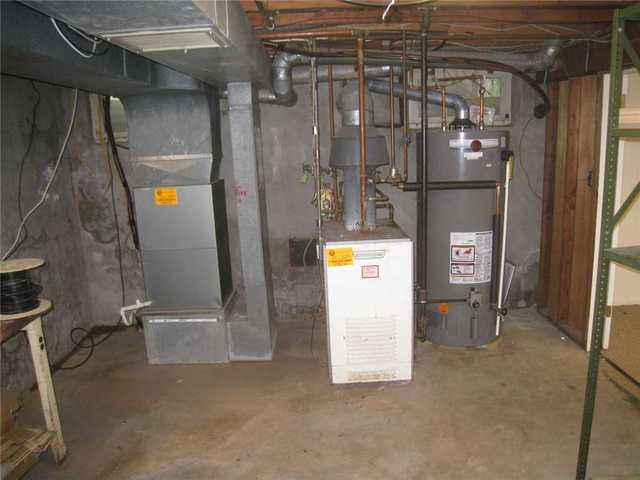
Do you like reading up on When Should You Replace Your Hot Water Heater?? Create a short review further down. We will be glad to see your thinking about this page. Hoping that you come back again in the future. Loved our write-up? Please share it. Help someone else locate it. Many thanks for your time. Kindly visit our blog back soon.
Expertly handling plumbing emergencies daily.